
Understand every customer conversation with AI Call Analysis, an intelligent solution that reviews calls, identifies key insights, tracks agent performance, and highlights customer concerns. Improve service quality, optimize communication, and make data-driven decisions with powerful, automated call intelligence.
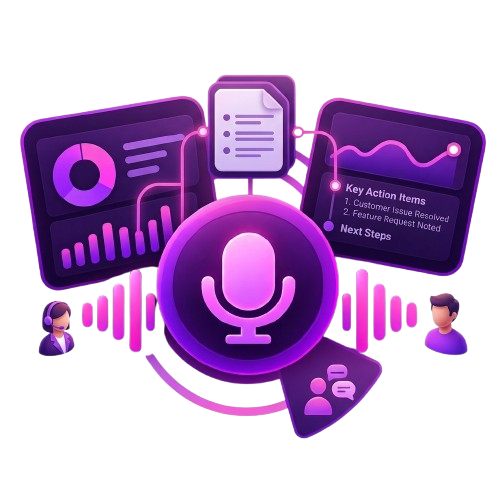
Valuable papers can be created by call records of groups from talks. It may make call reviews easier, save time, and train agents when offering units in a larger view of consumer calls.
Call centers plus sales staff who manage a large volume of different types of calls Automatic recording is a key element of a modern analytics system and call center.
Call transcription, call recording, AI call analysis, and CRM connection quality management help brands get more value in each client call.
Call records of team talks are able to generate important articles. It could reduce call reviews, save time, educate agents, and give groups a deeper view of client calls.
Automated recording is a key part of a modern analytics system and call center, even for calling centers with sales people to receive a range of calls.
Key information can be organized into a simple conversation summary.
A device may produce a quick summary in seconds, unlike listening to a long call recording:
“The client called to check on the progress of an open order. The agent asked about the condition of the package. They said the product is still on its way. The client then asked when they will be delivered.”
Picture a consumer calling a website to inquire about the status of their order. A machine can make the claim that someone calls an e-commerce site to inquire about the status of their order.
The task is more than simply the number of calls. It's the amount of data hidden within such calls.
A busy call center may have agents managing calls all day. Following every meeting, they may have to update client records, take notes, choose a call outcome, and prepare for the next meeting.
This generates a small bit of office work following each call. Even a little extra time on each chat can add up quickly when you have a lot of them.
While starting with a blank note following each call, agents are given a ready-made summary to review and update as needed.
This allows them to give more time to client service rather than recording discussions.
A decent summary is not just a cut record.
A transcript contains almost everything that was said. A summary should answer a more useful question:
Customer is interested in the product
Needs pricing for 50 users
Asked about CRM integration
Requested a product demo
Follow-up required next week
The agent or sales leader may pick up an issue without reviewing the full message.
A salesperson or agent can figure out what's going on without having to read the whole discussion.
Sales teams can log their discussions with clients using call summaries.
Sales call may involve product details, budget talks, requests and follow up date inquiries. If reps receive a high volume of leads, it may be difficult to recall all of these details manually.
An AI-generated summary can summarize each interaction in a few words.
This information can help sales representatives prepare for their next conversation.
Customer service is another key use case.
A consumer may seek help for the same problem on multiple bases. The customer may be required to again explain everything if the next contact is unaware of the previous conversation.
The next agent is able to see the current issue, actions taken, and jobs left to do.
A customer may seek help several times for a similar problem. If the next person does not understand what was said during the previous conversation, the client may have to explain everything again.
Managers can quickly identify important conversations and focus their attention where it is needed most.
Managers can then listen to the complete recording when they need more context.
This creates a practical balance between automated analysis and human review.
A call summary becomes much more valuable when linked to a CRM system.
After a discussion, the summary can be linked to the customer's profile. This gives sales and support personnel more clarity of past contacts.
For example, a CRM record could show:
Customer asked about pricing
Customer requested a demo
Sales representative to contact customer
In place of sifting among records or asking another employee questions, the group may access the data from a single location.
The real interface options vary based on the call summary software and CRM platform being used.
Not every business has the same requirements. Before selecting a solution, consider the following:
Review the capabilities, integrations, security, and flexibility of the software before making a decision.
The system should capture the main points without changing the meaning of the conversation.
Businesses may want summaries organized around specific fields such as customer issue, resolution, sentiment, or next action.
Check whether the platform works with the CRM and business tools you already use.
If your customers speak multiple languages, verify the languages supported by the system.
Call recordings and transcripts can contain sensitive information, so review the provider's security, access, storage, and retention practices.
AI-generated summaries should be easy for agents to check and correct when necessary.
The call summary has grown above the basic process of taking notes.
Reports may become a key element of an easier one as AI becomes more integrated with client interaction platforms.
A system is capable of identifying the customer's issue, generating a summary, marking the next action, and sending useful data to a different group. application.
This can convert a basic call recording into valuable business information.
However, versus replacing human analysis, AI should be used to help human teams. Key customer information should continue to be verified when accuracy, privacy, or business choices call for it.
A good way of handling the data coming from client interaction is summarizing calls.
Instead of sifting through old notes or lengthy recordings, agents and managers can access quick AI-generated summaries to get a sense of what happened on a call.
Automated call reports can also help sales and customer support or a large call center to organize discussions, improve follow-ups, reduce routine tasks, and make customer information easier to find.
With more client engagements taking place over the phone and via digital channels, being able to turn those conversations into clear, actionable data can be a key element of a robust communication strategy.


Connect with your customers faster, smarter and more efficiently with AI-powered calling.